


Key Takeaways
- Choose the installation format before comparing filtration features.
- Waterdrop offers reverse osmosis, ultrafiltration, carbon, faucet and pitcher systems.
- Check the exact replacement-filter code before buying a Waterdrop system.
- High GPD figures matter most when a household regularly needs larger volumes of filtered water.
- Countertop models are the clearest starting point for shoppers who do not want an under-sink system.
Waterdrop water filters cover substantially more ground than a standard filter jug: the UK range includes under-sink and countertop reverse osmosis systems, ultrafiltration, carbon filters, faucet-mounted products, electric dispensers and pitchers. That breadth is useful, but it also makes choosing by headline specifications alone a mistake.
The practical approach is to decide where the unit will live, how your household uses filtered water and which replacement cartridge it requires. This buyer’s guide explains how to narrow the range without paying for features that will sit unused.
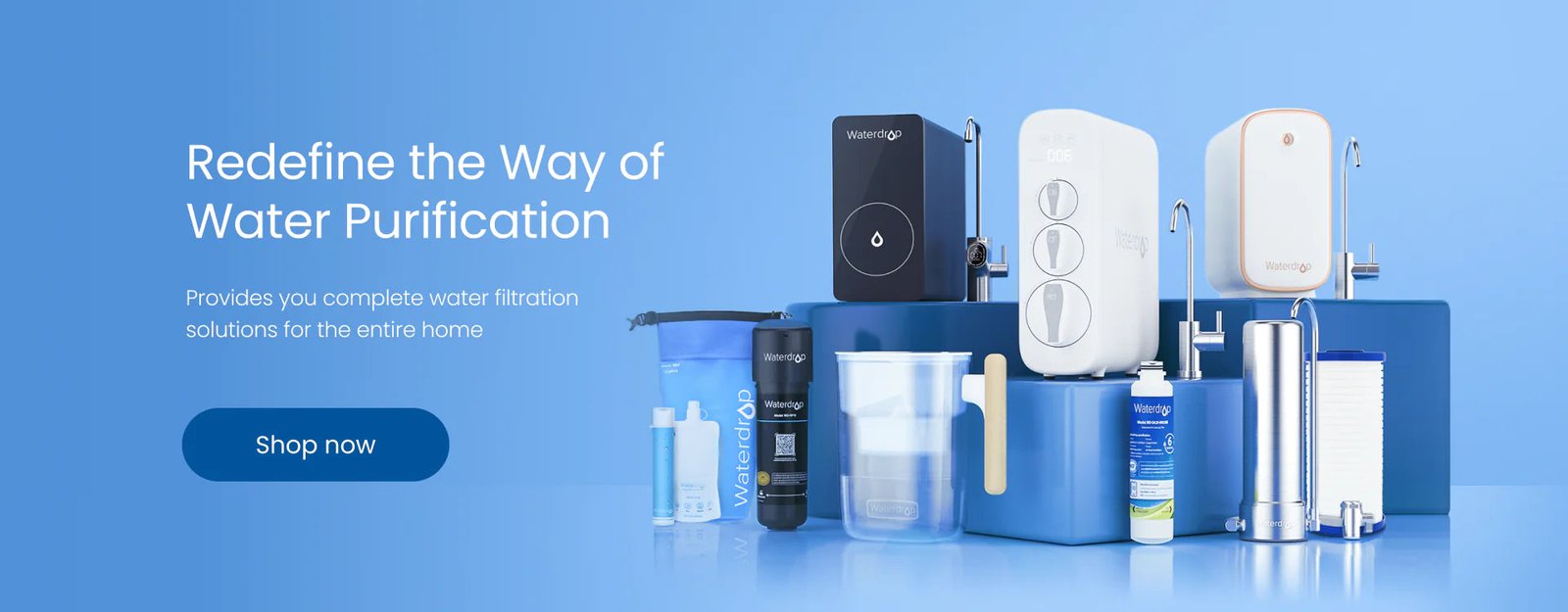
Start with the right type of Waterdrop water filter
The best starting point is the format that fits your kitchen, rather than the model with the longest feature list.
Waterdrop divides its range into several clear categories. Reverse osmosis models are available in under-sink and countertop formats, while simpler under-sink choices include ultrafiltration and carbon systems. The catalogue also contains faucet filters, pitchers and electric countertop dispensers.
Use this shortlist:
- Under-sink reverse osmosis: worth exploring when you want a dedicated kitchen system and have suitable cabinet space.
- Countertop reverse osmosis: a more obvious match for shoppers who want the appliance accessible on the worktop.
- Under-sink ultrafiltration or carbon: alternatives for buyers who do not automatically need an RO model.
- Faucet filter or pitcher: the most straightforward categories to investigate for basic, smaller-scale filtration.
- Hot or cold countertop dispenser: useful when dispensing temperature is part of the buying decision, not merely filtration.
Before ordering, measure the proposed space and establish what connections, power supply or dedicated faucet the selected product needs. Waterdrop lists both direct-connect systems and versions with a dedicated faucet, so similar-looking products should not be assumed to install identically.
Comparing Waterdrop water filters by household need
Match the system to daily routines and household size before using output figures as a tiebreaker.
Waterdrop lets shoppers browse by family size—one to three, four to six or seven-plus members—and by scenarios including cooking and drinking, apartment living and tea breaks. Those categories provide a more useful first filter than buying the largest model available.
| Household need | Category to compare first | Waterdrop examples or labels shown |
|---|---|---|
| Basic filtered water | Pitcher or faucet filter | PT-04 Chubby Pitcher, CTF-01 faucet system |
| Concealed everyday system | Under-sink carbon or ultrafiltration | Direct-connect and dedicated-faucet options |
| Countertop dispensing | Electric filter or countertop RO | ED01, ED02, ED04 and CoreRO ranges |
| Hot water on demand | Instant-hot or hot-and-cold RO | K19HG, C1H, A1 and A2 ranges |
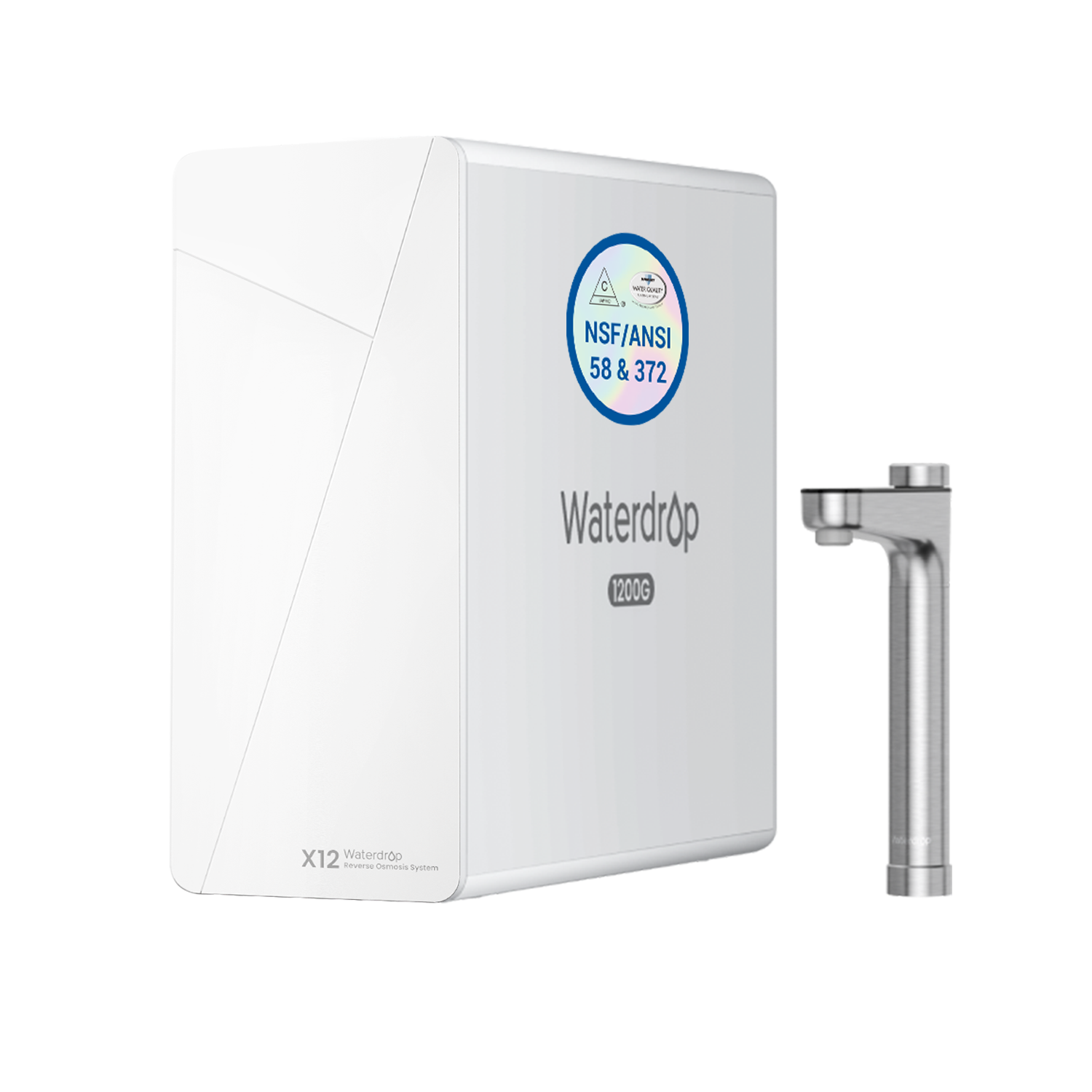
| Higher listed RO output | Under-sink RO | G3P600 at 600 GPD, X8 at 800 GPD, X12 at 1200 GPD and X16 at 1600 GPD |
Treat GPD as one comparison point, not a quality score. A larger listed figure can be relevant to a household with heavier demand, but it does not tell you whether the appliance dimensions, dispensing features or replacement schedule suit your kitchen.
You can compare the current Waterdrop range and product specifications before settling on a format.
Which Waterdrop features are worth prioritising?
Prioritise installation, water temperature and cartridge availability; consider remineralisation and maximum output only when they solve a specific need.
Hot, cold or room-temperature dispensing
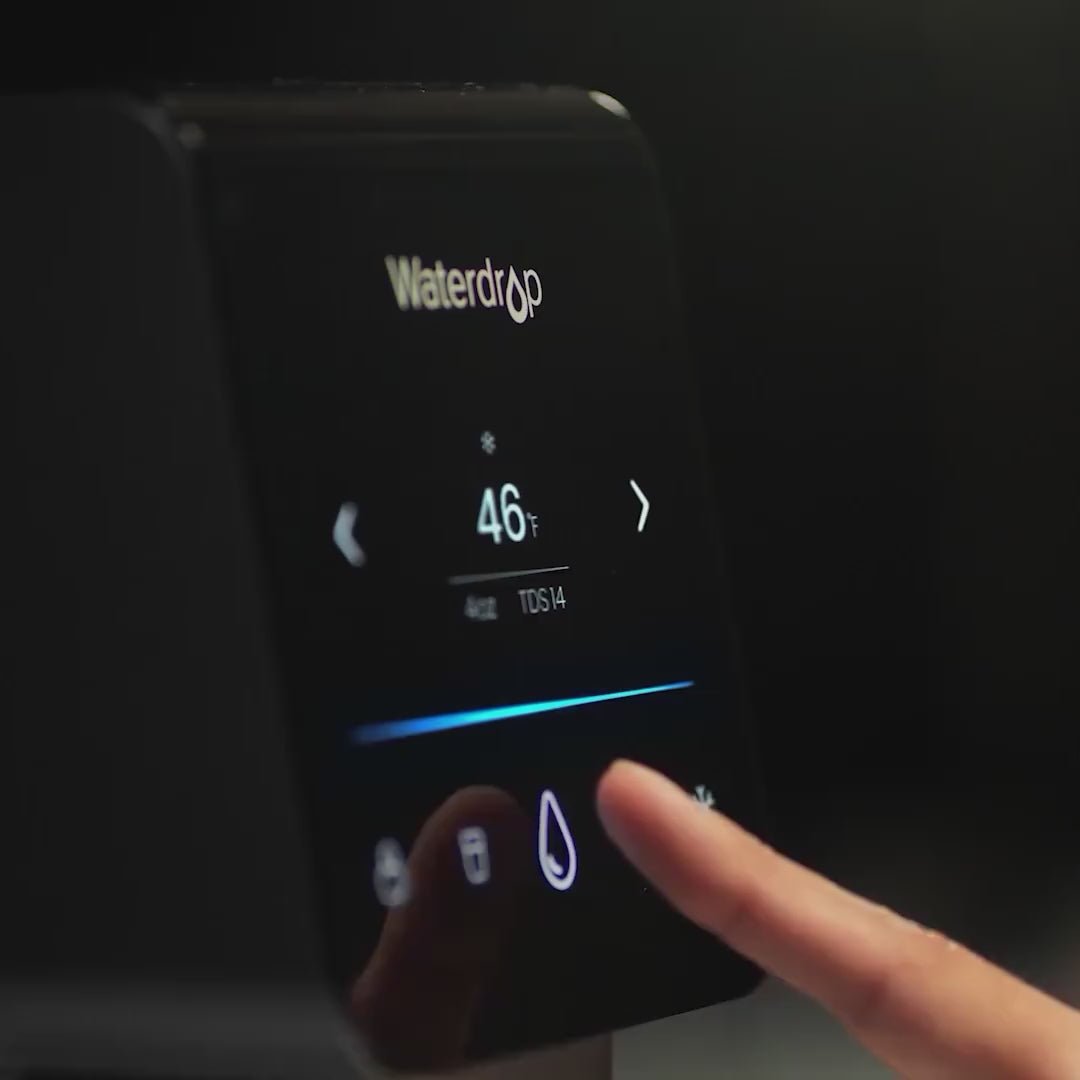
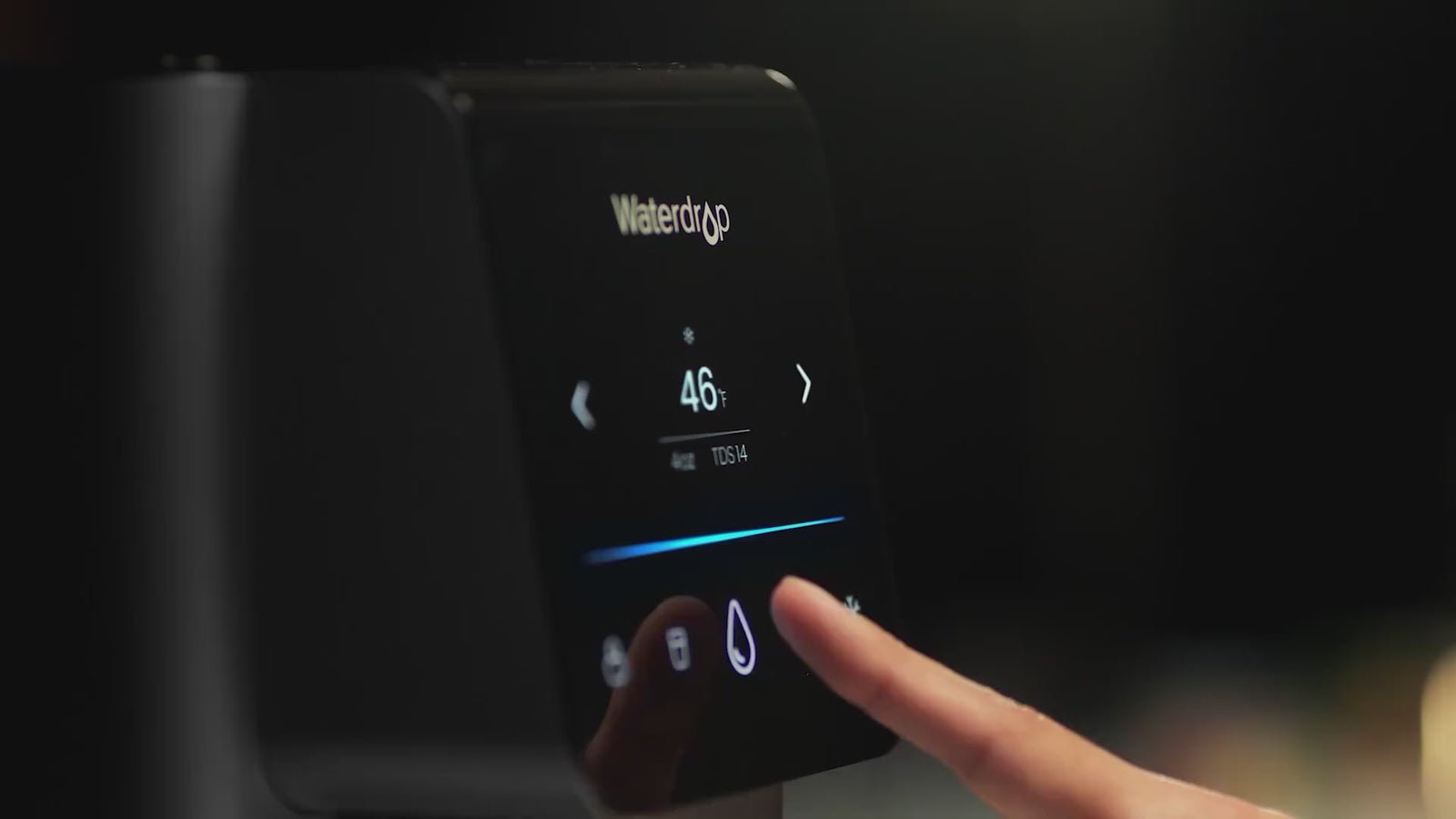
Waterdrop identifies the A1 and A2 as hot-and-cold reverse osmosis systems. It also lists instant-hot products such as the K6 under-sink system, K19HG countertop system and C1H countertop model. If you mainly fill a drinking glass or cooking pot, avoid assuming temperature controls are essential. If tea breaks are central to your routine, they may justify moving beyond a basic filter.
Remineralisation and alkaline-labelled models
The range includes products explicitly described as remineralisation or alkaline systems, including A2G, C1SL, X12, X16 and selected G-series products. Decide whether that named feature is actually on your checklist; do not infer that every RO system includes it.
Replacement-filter matching
Replacement compatibility deserves attention before checkout. Waterdrop lists model-specific cartridges such as the A1-CF, A2RF, K19RF, C1RF, KJF and G2CF, alongside RF10 filters for UA and UB systems. Record the full appliance model and corresponding cartridge code, then check the replacement section rather than buying on appearance.
Who should choose each Waterdrop option?
Waterdrop’s range is most useful when shoppers select by living situation instead of trying to find one universal system.
- The renter or apartment resident: begin with countertop units, pitchers and faucet filters, then verify any installation requirements.
- The family with frequent kitchen demand: compare the G3P600, X8, X12 and X16 by listed output, physical fit and replacement-filter needs.
- The tea or hot-drink household: examine the A1, A2, K19HG, C1H and K6 ranges for their stated hot-water functions.
- The minimalist kitchen planner: compare under-sink carbon, ultrafiltration and RO systems, paying close attention to whether a dedicated faucet is included or required.
- The budget-conscious buyer: start with the simplest format that meets the actual use case rather than paying automatically for hot-and-cold dispensing or higher GPD figures.
The practical pros and trade-offs
Waterdrop offers unusually broad format choice, although that variety makes compatibility checks essential.
Pros
- RO, ultrafiltration, carbon, faucet and pitcher categories are available in one range.
- Buyers can choose between countertop and under-sink formats.
- Hot-and-cold, instant-hot, remineralisation and alkaline-labelled options are clearly identified.
- The UK site advertises NSF-certified filters and free shipping on all orders.
- Replacement products are organised by system family.
Trade-offs
- Similar series names make the exact model and cartridge code easy to overlook.
- The highest GPD number may add capacity that a smaller household does not need.
- Installation details vary between direct-connect, dedicated-faucet, countertop and under-sink products.
- Certification should be checked on the exact product page rather than assumed to apply identically across the catalogue.
The final buying check
Choose Waterdrop by confirming format, dimensions, dispensing functions and replacement compatibility in that order.
A sensible shortlist should contain no more than two or three models serving the same use case. Compare their listed output, temperature options and named filtration features, then identify the correct replacement cartridge before looking at promotional pricing.
Waterdrop is particularly easy to shortlist when you know whether you want countertop convenience, an under-sink installation or instant-hot dispensing. Shoppers ready to compare those categories can browse Waterdrop water filters on the UK store. For the final decision, check the selected model’s current details and replacement options rather than relying on the series name alone.
Frequently Asked Questions
What types of water filters does Waterdrop sell in the UK?
Waterdrop’s UK range includes under-sink and countertop reverse osmosis systems, ultrafiltration and carbon systems, faucet filters, pitchers and electric countertop dispensers. It also offers replacement filters organised around specific product families.
Which Waterdrop system is best for a small kitchen or apartment?
A countertop system, faucet filter or pitcher is the clearest place to start because Waterdrop presents apartment living as a distinct shopping scenario. Check the chosen product’s dimensions, connections and power requirements before ordering.
Does Waterdrop offer hot and cold filtered water systems?
Yes. Waterdrop lists the A1 and A2 as hot-and-cold reverse osmosis systems, while products such as the K6, K19HG and C1H are presented as instant-hot options.
What do the 600, 800, 1200 and 1600 GPD labels mean in the Waterdrop range?
Those are the listed GPD output levels attached to models including the G3P600, X8, X12 and X16. Use the figure to compare capacity, but also check dimensions, installation requirements, dispensing features and replacement-filter compatibility.
Can every Waterdrop replacement filter fit every system?
No universal compatibility is stated. Waterdrop lists model-specific replacements such as A1-CF, A2RF, K19RF, C1RF, KJF and G2CF, so buyers should match the full system model to the stated cartridge code.
Are Waterdrop filters NSF certified?
Waterdrop’s UK website advertises NSF-certified filters. Certification should still be verified on the exact product page because the supplied catalogue information does not state that every model carries the same certification.